
When proof comes before understanding
On 20 November, a mathematician at Anthropic published a proof of the Riemann hypothesis, one of the most famous problems in mathematics, built with the AI model Claude. Verification software has confirmed it, but no one can yet explain it. What becomes of human intelligence when proof arrives before understanding?
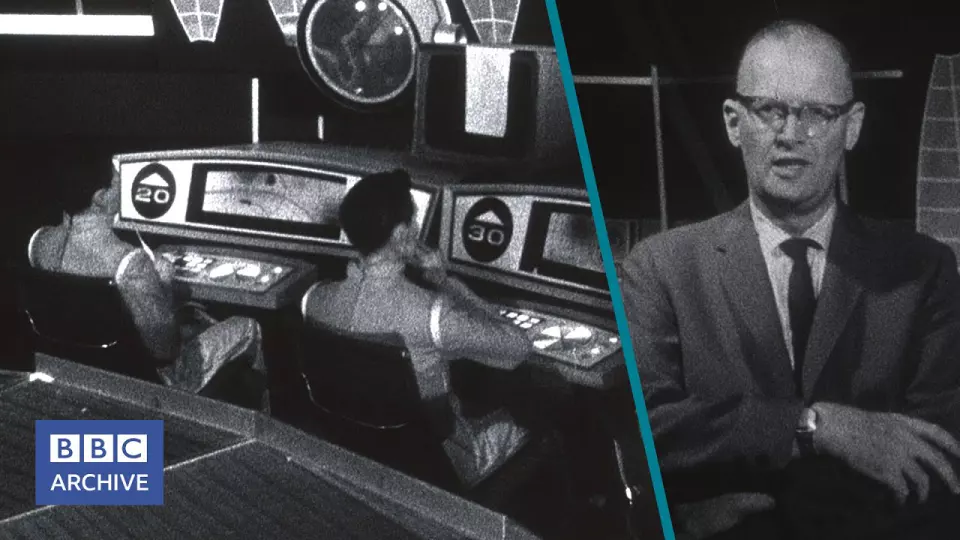
On 21 September 1964, Arthur C. Clarke looked into a BBC Two camera and told viewers that "the most intelligent inhabitants of that future world won't be men or monkeys. They'll be machines, the remote descendants of today's computers" [1]. The electronic brains of the day, he conceded, were "complete morons". That would not last: "They will start to think, and eventually they will completely outthink their makers."
Then he raised the question everyone was thinking: "Is this depressing? I don't see why it should be." We superseded Cro-Magnon and Neanderthal man, he went on, and we presume we are an improvement. Biological evolution was drawing to a close, and mechanical evolution, "thousands of times swifter", was beginning. Hence the line that made the segment famous: "We should regard it as a privilege to be stepping stones to higher things" [1][2].
Sixty-two years later, on 20 November 2026, Levent Alpöge, a mathematician at Anthropic, published a four-page note in which he writes: "I believe I have, working with Claude, discovered a proof of the Riemann Hypothesis" [3]. Near the end, he adds, the machine left him behind: "Claude far outpaced me near the finish line. No, Claude flew, and danced, and sparkled near that finish line."
Clarke never put a date on his prophecy. But the question he raised is one that progress in artificial intelligence now makes impossible to dodge: what happens to human intelligence once machines start producing results we can no longer fully understand?
What actually happened
Anthropic did not solve the Riemann hypothesis. Levent Alpöge, a number theorist employed by Anthropic, claims to have proved it with Claude, the company's model [3][4].
The stakes, on the other hand, are not overstated. Stated by Bernhard Riemann in 1859, the hypothesis says that the "non-trivial" zeros of a function, the zeta function, all lie on a single vertical line, the one with real part 1/2. Behind this abstract geometry sits the distribution of the prime numbers, the inner architecture of arithmetic. It is one of the Clay Mathematics Institute's seven Millennium Prize Problems, with a million dollars attached.
What Alpöge published comes down to three things [3][5]:
- A four-page note sketching the strategy, in which he admits that his own paraphrase "might make zero sense".
- Roughly 17 million lines of Lean code, spread over 175,187 files and weighing more than 61 gigabytes uncompressed, which make up the formal proof.
- A deliberate absence: the natural-language write-up Claude produced ran past 250,000 pages, and he chose not to publish it.
He claims even more: the generalised Riemann hypothesis, which extends the result to a whole family of related functions. According to his note, the work with Claude began on 6 October and the decisive steps came in mid-November [4].
Two facts put the result in context. First, it did not come out of nowhere: in October, OpenAI announced a proof of the so-called "quasi-Riemann" hypothesis, a weaker version, one form of which had already been checked in Lean [7]. Second, on the very same day, Ravi Vakil, president of the American Mathematical Society, posted a 940-page manuscript by Alessandro Masullo, a researcher at Stanford, who also claims a proof of the generalised hypothesis, for a family of functions known as Hecke L-functions. A proof that is entirely human, and the fruit of twelve years' work [3][6].
The same problem, two claimed proofs in a single day. One you read, the other you compile. But being readable does not make a proof true, any more than formal verification makes it understood.
Lean, or the proof that compiles
Lean is a proof assistant: a formal language in which you write definitions, statements and proofs. Its kernel checks that every proof respects the logical rules of the system. An AI can propose a step that is appealing and wrong. What it cannot do is get the kernel to accept that step by stating it confidently.
The simplest analogy is a spellchecker taken to the extreme. A spellchecker confirms that each word exists. Lean confirms that each formalised argument obeys the rules of logic, without fatigue, without indulgence, and without a single "it is easy to see that". That is exactly what makes it so valuable against AI. A language model can write mathematics that is convincing and false. Lean cannot be talked round.
Checking a proof like this one rests on four pillars, which the mathematician Kevin Buzzard, a leading figure in formalisation, had set out a few days before the announcement [5]:
- Does the statement say what mathematicians mean? The proof targets a definition of the Riemann hypothesis already present in Mathlib, Lean's large collaborative library of mathematics, built by hundreds of human contributors.
- Do the verification tools accept the code? Andrew Sutherland, at MIT, reports that all 175,187 files compiled and checked without error.
- Is the theorem proved exactly that statement? Comparison tools make it possible to confirm that no definition was quietly altered along the way, and that the proof does not lean on unexpected extra assumptions. Two independent tools confirmed that the theorem proved is exactly Mathlib's statement [8].
- Does a trusted kernel accept the proof? The "kernel" is the small part of Lean that actually checks proofs. The proof was also replayed by independent checkers written in other programming languages.
On 21 November, the Lean and Mathlib communities issued a joint statement expressing their confidence that the formal proof is correct [8]. That is a far stronger result than a successful compilation. It does not mean, however, that the mathematical community already has a full conceptual explanation of the proof, or that every stage of scientific recognition is complete.
The division of labour, at least, is clear. Alpöge says he designed the overall architecture, a modern reworking of a method that had proved the analogue of the Riemann hypothesis for curves over finite fields. Claude produced most of the technical manipulations, the lemmas and the code. Lean acted as referee [3][4].
This is where the real break lies. For centuries, a proof was first and foremost a text written to convince other minds. This one is first and foremost a formal object written to be checked by a machine.
Correctness can now be settled before anyone has rebuilt the understanding.
What Lean proves, and what it doesn't
Lean can establish that a statement follows from the chosen definitions and axioms, provided the verification kernel is sound and the formal statement matches what mathematicians set out to prove. That is enormous. But the guarantee does not settle every question. It moves some of them elsewhere.
First limit: the machine checks what it was asked to check. If the formal definition of the zeta function departed, however subtly, from the one mathematicians use, Lean could flawlessly prove something other than the Riemann hypothesis. Buzzard points out that a formal statement can be verified and still fail to match the mathematical claim it was meant to capture [5].
Trust does not disappear. It shifts to the initial translation, which remains a human affair. Here, the Mathlib statement was written by people long before this proof existed, which is a significant safeguard.
Second limit: checking is not understanding. The mathematician Maksym Radziwiłł, at NYU, put it bluntly: "If the symbols are right and follow the rules, then the symbols are a valid proof." But that, he argued, is not really the point: "The object of mathematics as the rest of science is really the question 'why?' and this doesn't answer it at all" [3]. In 1994, the Fields medallist William Thurston made a similar case: mathematics is not about producing theorems for their own sake, but about advancing human understanding of mathematics [9].
A proof that no one can yet explain gives us certainty without handing over the reasons that make it fruitful. It can close a question, steer research and yield new results. What it cannot yet do is open every path that an intelligible proof might.
There is a precedent. In 1976, Kenneth Appel and Wolfgang Haken proved the four colour theorem with the help of a computer, which checked nearly 2,000 configurations [10]. The community argued for years about the status of that proof. But the strategy remained legible: only a vast amount of checking had been delegated.
The scale here is different. The formalisation runs to millions of lines, and much of the construction was handed to a model. Alpöge has announced talks and expository papers. Other mathematicians are already working to reconstruct the ideas behind the proof. That is all to the good.
But the order has flipped: formal certainty now arrives before shared understanding.
Third limit: verifying knowledge becomes a matter of infrastructure. Replaying a proof of this size takes serious computing resources. Buzzard reports that an earlier formalisation of 13 million lines required a machine with 96 cores and 500 gigabytes of memory [5].
The verification tools may be open and the rules of logic public, and yet running them can depend on hardware that is unevenly distributed.
None of this means that truth now belongs to whoever owns the machines. The independent checks on this proof show precisely what scientific communities and open infrastructure are worth. But a new asymmetry is emerging: some have the models capable of producing proofs, others the resources to verify them, others still the time and the skills to try to understand them.
If a technology is a system that transforms energy in order to create or modify power relations, the production of mathematical knowledge is no exception. The material and intellectual conditions for making that knowledge one's own can become a stake in a struggle for power.
Wallace's puzzle: why can we calculate the heavens?
Before asking what we stand to lose, we should take the measure of what we have.
In 1705, Edmond Halley predicted that the comet seen in 1682 would return towards the end of 1758. He died in 1742. The comet was spotted on 25 December 1758, ahead of its closest approach to the Sun in March 1759. A primate, armed with a few observations and a quill, had predicted the motion of a celestial body sixteen years after his own death.
No survival pressure ever directly selected for the ability to calculate a comet's orbit. Alfred Russel Wallace, who discovered natural selection alongside Darwin, was struck by this mismatch. In 1869 and 1870, he observed that nothing in our ancestors' environment directly rewarded a talent for abstract mathematics or for music [11]. His conclusion, that a higher intelligence had guided human evolution, appalled Darwin, who wrote to him: "I hope you have not murdered too completely your own & my child" [12].
Wallace got the answer wrong, but he had asked a fruitful question. The cognitive sciences now sketch an explanation in three steps. Evolution selected general abilities, not theorems: several animal species, like human infants, have an approximate "number sense" [13]. Those old abilities were then put to new uses, which Stephen Jay Gould and Elisabeth Vrba called exaptation [14], and which Stanislas Dehaene, for the brain, calls "neuronal recycling" [15]. Finally, the transformation relied on symbols. An approximate sense of number cannot tell 1,000,001 from 1,000,002. That takes numerals, a notation, a script, all developed and passed on collectively.
Abilities shaped in particular environments thus turn out, once extended by symbolic systems, to be capable of describing phenomena on the scale of the universe. In 1960, the physicist Eugene Wigner wrote of "the unreasonable effectiveness of mathematics in the natural sciences", "a wonderful gift which we neither understand nor deserve" [16].
Human mathematical abstraction, then, is not an organ that evolution handed us ready-made. It is the product of a history in which biological capacities, symbolic inventions and institutions of transmission come together. And it is this coupling that the Riemann proof now puts to the test.
Exosomatisation: thinking outside the body
This coupling has a name. In 1945, the biomathematician Alfred Lotka distinguished endosomatic organs, the ones we carry in our bodies, from exosomatic organs, the ones we make outside them: the hammer, the telescope, the book [17]. The economist Nicholas Georgescu-Roegen took up the distinction in 1971 to think of the economy as an extension of our biological bodies [18].
In 1964, the very year of Clarke's broadcast, the palaeontologist André Leroi-Gourhan published the first volume of Le Geste et la Parole (Gesture and Speech). He described a human history marked by the externalisation of functions: the tool extends the hand, writing extends memory [19].
Bernard Stiegler built a whole philosophy of technics on this idea. We do not think with a brain that then picks up ready-made tools. Our thinking is also formed through external supports, above all the memory traces he called tertiary retention [20].
Mathematics is the perfect example. Algebraic notation, zero, the integral sign are not mere packaging for ideas that already existed. They are symbolic inventions that made certain ideas thinkable in the first place.
But these supports have one decisive property: they can find their way back into the mind.
A student learning a proof rebuilds it in their head. They handle the symbols, identify the steps, grasp why the result holds. Externalised knowledge becomes a capacity they can in turn exercise, pass on and transform.
That loop is what makes mathematicians.
Lean, too, is a symbolic language invented by people. What changes is the scale. Seventeen million lines of proof cannot be made one's own the way a proof worked through at the blackboard can. Validation can now run far ahead of understanding.
That does not mean the loop has been cut for good. Mathematicians will try to extract ideas and methods from this formal mass, perhaps even a far shorter proof. But that work of reappropriation has become a separate undertaking, one that needs its own resources and may never fully succeed.
The symbol leaves the human mind. The machine transforms it and checks it. What remains to be seen is in what form it can come back.
Stiegler had a word for one of the risks of this transformation: proletarianisation. Not only in the sense of economic hardship, but as the loss of knowledge absorbed into a technical system, to the point where those who use it can no longer make it their own.
The nineteenth-century worker could lose part of their craft to the machine tool. Stiegler extended the question to theoretical knowledge itself, that of engineers, doctors and researchers [20].
Externalisation, however, does not produce that loss automatically. Writing made it possible to preserve and transmit knowledge. Scientific instruments made visible what had escaped us. Computers opened up whole new fields of mathematics.
So the real question is not whether we externalise our thinking. It is under what conditions externalisation expands our abilities, and under what conditions it weakens them.
The fear is not new. In the Phaedrus, Plato has an Egyptian king warn that writing will breed forgetfulness, and that it offers "the appearance of wisdom, not true wisdom" [21].
Plato was half wrong: writing multiplied thought. But only half, because it did so only where people learned to read, interpret and argue over texts.
Stiegler saw technics as a pharmakon, both remedy and poison. What tips the balance is who organises the learning of its uses, and for whose benefit.
The concrete risk, then, is less spectacular than the disappearance of human intelligence, and runs deeper. If young mathematicians learn to steer models without learning to build, examine and explain proofs, a single generation could erode skills that centuries of transmission put together.
AI would not necessarily take away our ability to think. It could change the conditions under which we learn how.
The same mechanism is at work in cybersecurity and in the labour market: AI does not just automate results, it also automates the very tasks through which beginners acquire their skills.
The danger is not that machines can prove theorems. It is that we stop teaching people to prove them because machines can.
The power to prove, the capacity to understand
If the proof holds, and formal verification already gives it considerable weight, this may be one of the major intellectual events of our time.
It would be absurd to reject it in the name of a human purity that mathematics never had. Mathematics has always advanced with tools, from the abacus to the calculator.
One could object that the machine is simply continuing that story: tools that spare us certain operations so that we can think new ones.
That is true.
Nothing rules out mathematicians turning these millions of lines into a handful of luminous ideas, nor AI helping them do it. A machine-generated proof can open new questions, suggest methods and enrich human understanding. It is not condemned to stay opaque.
But possibility is not a guarantee.
It will depend on the time given to understanding, the resources devoted to teaching and access to verification infrastructure. It will also depend on what scientific institutions choose to reward: the speed at which results are produced, or the ability to explain them and pass them on.
This is where I part ways with Clarke. He saw the overtaking of human intelligence as a new stage of evolution, almost a destiny to be welcomed with enthusiasm. But that view confuses two things: the power of a system, and the capacity of those who built it to understand what it produces.
Our intelligence is not only biological. It is also exosomatic. Mathematical knowledge is not passed on through genes but through learning symbols, methods and lines of reasoning. That knowledge can be transformed, enriched or impoverished far faster than our biological capacities.
All it takes is a change in the conditions under which it is handed down.
20 November offered two almost opposite experiments. On one side, a formal proof whose correctness machines can check, but whose mathematical understanding has yet to be rebuilt. On the other, a 940-page human manuscript, open to reading and criticism, but whose validity has yet to be established too.
One you compile, the other you read. The first reminds us that verification does not always require understanding. The second, that readability is never enough to guarantee truth.
Mathematics needs both. And we now have to learn to make them talk to each other.
That conversation will not organise itself. It will depend on very concrete decisions:
- Require major formal proofs to come with genuine explanatory work, and fund that translation as research in its own right.
- Keep verification accessible, by supporting open tools, independent communities and public computing infrastructure.
- Keep learning to prove, even when a machine can, because understanding an argument is a capacity built through practice.
Our capacity for abstraction is the extraordinary product of a long biological and cultural history. Circuits that once helped estimate quantities have, together with language, writing and centuries of transmission, made it possible to predict the return of comets.
AI can extend that history. It can let us discover truths we would never have reached alone. But an increase in our power to calculate and to prove does not, on its own, guarantee any progress in our understanding.
The question is not only how far machines will be able to think for us. It is what we will still choose to learn to think for ourselves.
Sources
- BBC, Horizon, "The Knowledge Explosion", BBC Two, 21 September 1964, excerpt "1964: Arthur C. Clarke predicts the future", BBC Archive.
- Quote Investigator, "We Should Regard It as a Privilege To Be Stepping Stones to Higher Things", 29 May 2026 (written version in The Listener, October 1964).
- Quanta Magazine, update on the proof claimed by Levent Alpöge, November 2026.
- Levent Alpöge, Remark, four-page note, 20 November 2026.
- AgentsPulse, "Riemann Hypothesis Lean Proof: How the Claude Proof Was Checked", November 2026 (drawing on Andrew Sutherland's verification log, MIT, and Kevin Buzzard's post on the Xena blog of 12 November 2026).
- Joseph Howlett, "Dueling claims of Riemann hypothesis proofs emerge", Scientific American, 20 November 2026.
- Quanta Magazine, "AI Proved the Quasi-Riemann Hypothesis. What Happens Now?", 19 October 2026.
- Lean FRO and Mathlib Initiative, "Lean verification of the Riemann Hypothesis", joint statement, 21 November 2026.
- William P. Thurston, "On proof and progress in mathematics", Bulletin of the American Mathematical Society, vol. 30, no. 2, 1994.
- Kenneth Appel and Wolfgang Haken, "Every planar map is four colorable", Bulletin of the American Mathematical Society, vol. 82, no. 5, 1976.
- Alfred Russel Wallace, review of Lyell, Quarterly Review, April 1869, and "The Limits of Natural Selection as Applied to Man", in Contributions to the Theory of Natural Selection, Macmillan, 1870.
- Charles Darwin, letter to Alfred Russel Wallace, 27 March 1869, Darwin Correspondence Project.
- Stanislas Dehaene, La Bosse des maths, Odile Jacob, 1997 (in English: The Number Sense, Oxford University Press, 1997).
- Stephen Jay Gould and Elisabeth Vrba, "Exaptation, a missing term in the science of form", Paleobiology, vol. 8, no. 1, 1982.
- Stanislas Dehaene, Les Neurones de la lecture, Odile Jacob, 2007 (in English: Reading in the Brain, Viking, 2009).
- Eugene Wigner, "The Unreasonable Effectiveness of Mathematics in the Natural Sciences", Communications on Pure and Applied Mathematics, vol. 13, no. 1, 1960.
- Alfred J. Lotka, "The Law of Evolution as a Maximal Principle", Human Biology, vol. 17, no. 3, 1945.
- Nicholas Georgescu-Roegen, The Entropy Law and the Economic Process, Harvard University Press, 1971.
- André Leroi-Gourhan, Le Geste et la Parole, vol. 1 Technique et langage, Albin Michel, 1964, vol. 2 La Mémoire et les rythmes, 1965 (in English: Gesture and Speech, MIT Press, 1993).
- Bernard Stiegler, La Société automatique. 1. L'avenir du travail, Fayard, 2015 (in English: Automatic Society, Volume 1: The Future of Work, Polity, 2016).
- Plato, Phaedrus, 274c-275b, translated by Harold N. Fowler, Perseus Digital Library.